USA

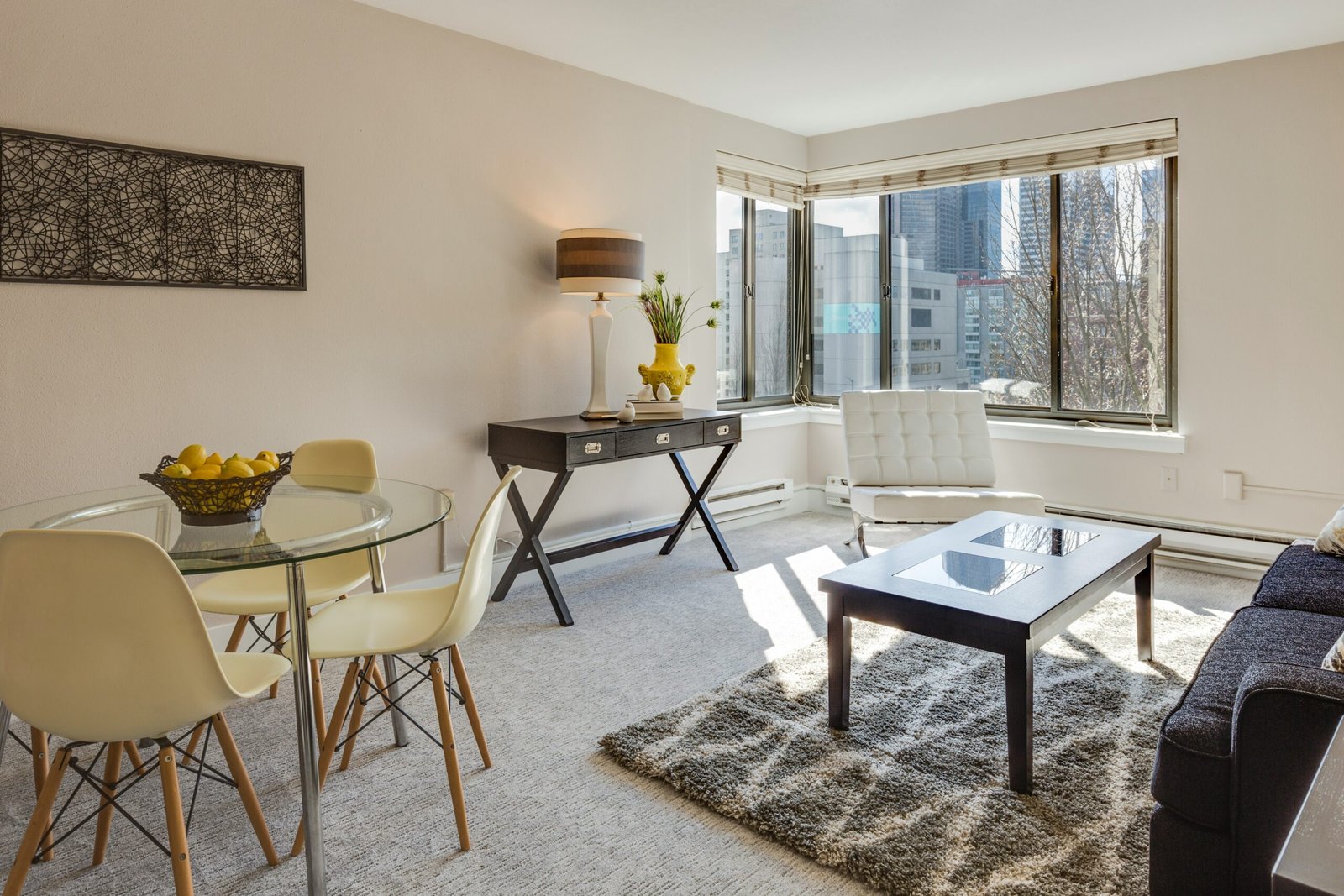
Within the dynamics of contemporary urban living, studio apartments have emerged as a defining residential typology, emblematic of both spatial constraint and creative potential. Their compact dimensions pose undeniable challenges for organization and functionality, yet they simultaneously invite innovation in design strategies that transcend mere efficiency. To reduce studio interiors to technical problem-solving would be to overlook their broader cultural significance: these spaces operate as discursive arenas where social values, individual aspirations, and global aesthetic currents converge. This article contends that studio design must be understood not simply as an exercise in optimization, but as a critical negotiation between functionality, aesthetic expression, and emotional well-being—an intersection that reveals how design mediates identity and culture in the modern city.
Advocates of a functional approach contend that studio design must prioritize spatial efficiency as its central principle. Within the constraints of limited square footage, the capacity to reconfigure environments becomes essential. Modular furniture—such as wall-mounted desks that fold away when not in use, or sofa beds that seamlessly transition from seating to sleeping—illustrates how adaptability can maximize utility without sacrificing comfort. Similarly, hidden storage solutions, including under-bed compartments or cabinetry integrated into staircases in loft-style studios, demonstrate how design can reclaim otherwise wasted space. Multifunctional zones, where a dining table doubles as a work surface or a partition serves both as shelving and spatial divider, further highlight the ingenuity required in compact living.
From this perspective, interior design is not merely decorative but emerges as a strategic response to the demands of contemporary life. The rise of remote work, flexible schedules, and hybrid lifestyles underscores the necessity of spaces that can fluidly accommodate professional, personal, and recreational activities. In this sense, the functional approach positions studio design as a discipline of optimization—transforming spatial limitations into opportunities for innovation and resilience in modern urban living.
Nevertheless, to reduce studio design solely to questions of functionality would be to overlook its broader cultural and psychological dimensions. The growing popularity of styles such as Japandi—a fusion of Japanese simplicity and Scandinavian warmth—and the rise of warm minimalism reveal a collective desire for environments that embody serenity, balance, and harmony. These approaches privilege restraint, yet they do so in ways that cultivate emotional comfort rather than austerity.
The deliberate use of earthy color palettes—beige, terracotta, muted greens—alongside natural materials such as wood, linen, and stone, and the incorporation of soft textures like wool or cotton, extend beyond aesthetic preference. They respond to a deeper cultural impulse: the need to reconnect with nature and to mitigate the psychological pressures of dense urban living. In this sense, design choices function as symbolic acts, transforming compact studios into restorative sanctuaries.
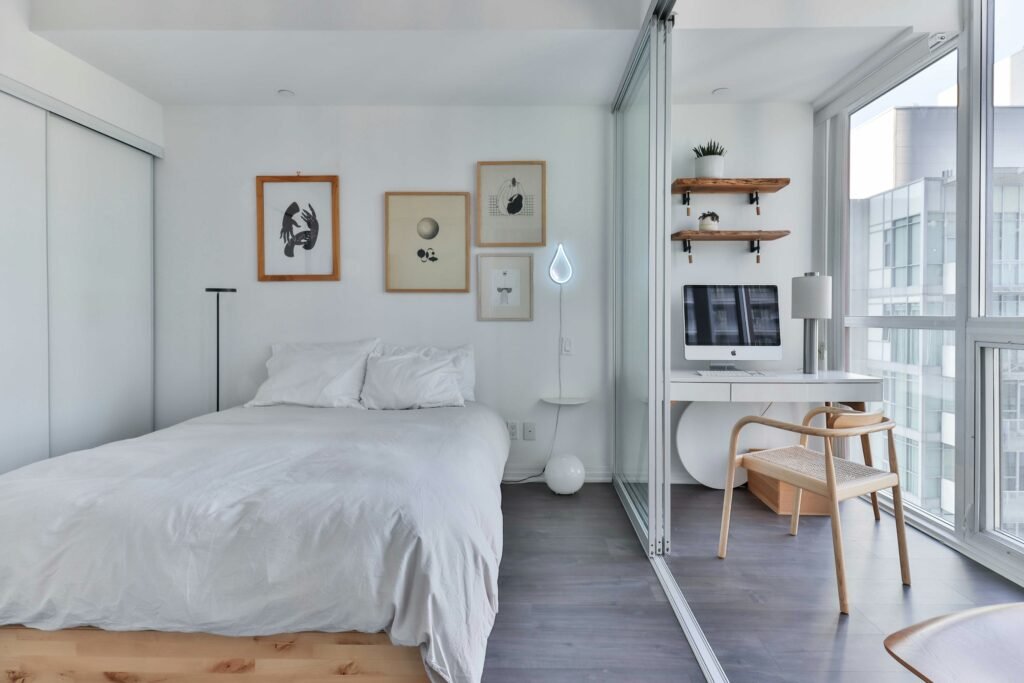
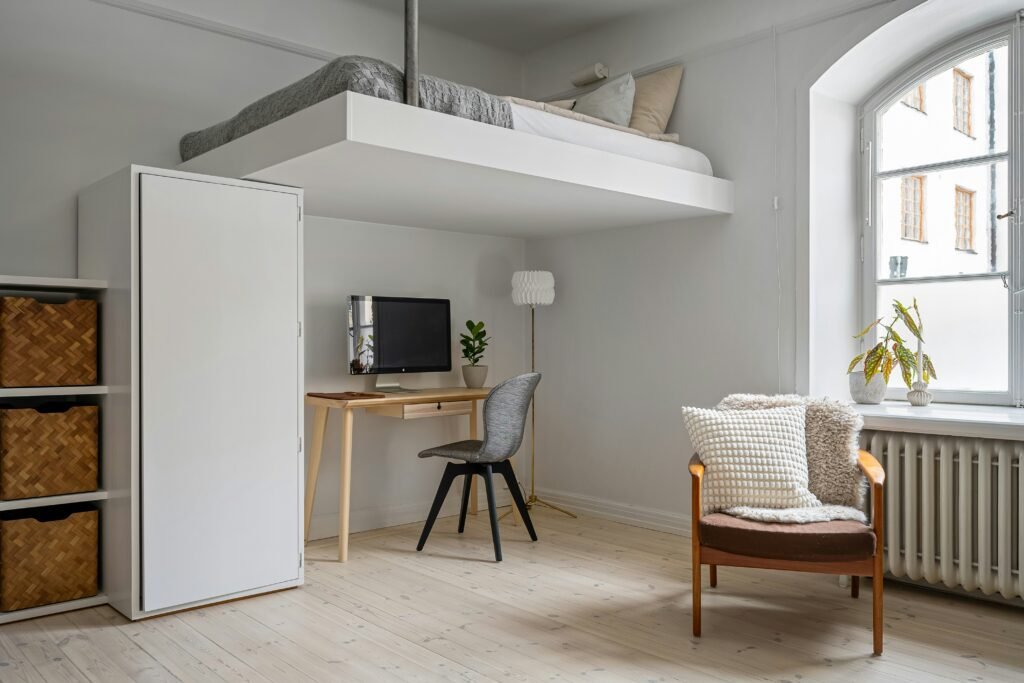
Thus, studio interiors become more than visually pleasing arrangements; they operate as a visual language through which identity and values are communicated. A carefully curated Japandi-inspired studio, for example, may signal a commitment to sustainability and mindfulness, while a warm minimalist space might express a preference for clarity and emotional equilibrium. In both cases, aesthetics transcend decoration, serving instead as cultural narratives that articulate how individuals situate themselves within the modern city.
However, critics caution that aesthetic homogenization—most notably the dominance of minimalism—risks flattening cultural diversity and diminishing opportunities for individual expression. While minimalism offers clarity and serenity, its ubiquity can inadvertently produce uniformity, leaving little room for personal narratives or cultural specificity. In response, maximalism and eclecticism have emerged as counter-movements that reclaim authenticity through bold personalization and layered storytelling.
Design creates culture. Culture shapes values. Values determine the future.
Robert L. Peters.
Concrete examples illustrate this resistance: a studio adorned with vibrant textiles from Latin America, a gallery wall mixing contemporary prints with family heirlooms, or the integration of vintage furniture alongside modern pieces. These design strategies not only break the monotony of minimalism but also foreground identity, heritage, and creativity. Eclectic studios, for instance, may juxtapose Moroccan rugs with Scandinavian lighting, or combine industrial shelving with handcrafted ceramics, producing interiors that celebrate hybridity rather than conformity.
From this viewpoint, studio design should not be conceived as a neutral or standardized space. Instead, it becomes a stage where narratives of inclusion, cultural pride, and creative resistance against global standardization are actively negotiated. Designers and residents alike are encouraged to embrace eclectic layering, incorporate artisanal or locally sourced elements, and experiment with color and texture as tools of self-expression. Such practices ensure that studios remain not only functional and aesthetically pleasing but also deeply personal and culturally resonant.
In conclusion, interior design in contemporary studios extends far beyond the pragmatic task of spatial organization; it operates as a dynamic field of dialogue where functionality, aesthetics, and culture intersect. While efficiency and serenity remain essential values—embodied in modular layouts or minimalist palettes—it is equally imperative to acknowledge the role of diversity and personal expression. A studio that integrates handcrafted furniture, culturally significant textiles, or eclectic art collections demonstrates how design can serve as both a practical solution and a narrative of identity.
Thus, studio interior design must be conceived as a strategic practice: one that not only optimizes limited space but also cultivates emotional well-being, affirms individuality, and mirrors the evolving social dynamics of urban life. By embracing this holistic perspective, designers and residents transform studios into more than compact dwellings—they become cultural microcosms, restorative environments, and authentic reflections of contemporary living.
Reflection
The design of compact studio spaces is often framed as a problem of efficiency: how to maximize utility within the limits of reduced square footage. Yet this perspective, while pragmatic, risks overlooking the deeper cultural and personal dimensions of interior design. Studios are not merely functional containers; they are lived environments where identity, heritage, and creativity are negotiated. A space that privileges modular furniture and hidden storage may achieve technical optimization, but what of the studio that foregrounds cultural artifacts, bold aesthetics, or personal narratives—even at the expense of strict practicality? This article explores the tension between efficiency and expression, arguing that the most compelling studio designs are those that balance spatial ingenuity with cultural resonance.
We invite you to join the dialogue on studio interior design. The questions raised in this article—about the balance between functionality, aesthetics, and cultural identity—are not only theoretical but deeply connected to everyday living. How do you navigate the tension between efficiency and personal expression in compact spaces?
Share your insights, experiences, or examples in the comments section. Your perspective will enrich this discussion and help us explore how design can simultaneously optimize space, foster well-being, and reflect cultural diversity.